
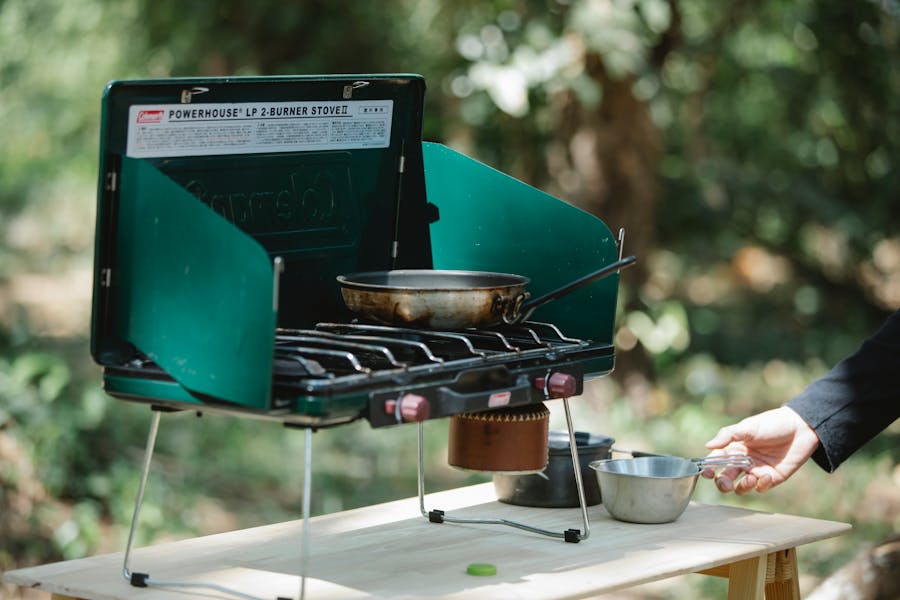
You know what? Camping becomes more interesting when we spend several days in a certain place. By doing so, you can cut down your bond with your ordinary lifestyle and live with a satisfactory mind that helps you to relax. But, when camping for several days you have to arrange sufficient accessories that you need during your camping. Among them, the camping stove takes a prominent place. For a long time use, you have to choose an appropriate fuel that works for a long time. Here is the best camping stove fuel guide that may help you.
When you search for camping stove fuel, you will come across various types of fuels. Gasoline, Kerosene, Propane, Butane, Isobutane, and White Gas are the usual fuel types used for camping stove fuel. But, today we have decided to discuss three famous camping stove fuels; Butane, Isobutane, and Propane. So, through this camping stove fuel guide you will know more information regarding camping stove fuel.
Differences between Butane vs Isobutane vs Propane
All these three are fuels that are used in ordinary life. These fuels have their own identities that may help you when using them.
Butane
What is Butane?
Butane is derived from crude oil that was formed from the remains of plants and animals held under great pressure for millions of years. As crude oil contains hydrocarbon, this is a hydrocarbon gas that comes from natural gas processing and oil refining. Normal Butane can be used for gasoline blending, as a fuel gas, as fragrance extraction solvent, etc.
Features of Butane:
- Butane is highly flammable, colorless, easily liquified, and odorless.
- It is a safe, non-toxic, and clean-burning fuel that is a great source of energy.
- Butane is a gas at room temperature and at normal atmospheric pressure.
- It can be easily liquified not only by decreasing the temperature to -1 degrees Celsius but also by increasing the atmospheric pressure with the gas canister.
- If there is oxygen, Butane can burn to form Carbon Dioxide and water vapor.
Dangers of Butane:
- Inhaling Butane from bottles can cause short term effects such as;
Dizziness
Nausea
Headaches
Memory loss
Fluctuating Blood Pressure - As Butane is typically stored in canisters, it turns into highly flammable and pressurized gas. So, there is a possibility of an explosion.
- Butane is a colorless and odorless gas. So, it is hard to detect any leakage.
- When Butane gas is directly exposed to the skin or eyes, it can cause freeze burns or frostbite.
Isobutane
What is Isobutane?
Isobutane is a colorless, odorless, and transparent gas with a faint gasoline odor. It is shipped as a liquefied gas under its vapor pressure. It is used as a refrigerant, fuel, and aerosol propellant, and in rubber. Also, it occurs in cigarette smoke.
Features of Isobutane:
- Colorless and odorless
- Soluble in water
- It is obtained by Petroleum fractionation of natural gas
- Forms an explosive and flammable mixture with air low concentrations.
Dangers of Isobutane:
If you inhale or come in contact with Isobutane you will feel the following symptoms:
Drowsiness
Narcosis
Asphyxia
Propane
What is Propane?
Propane is a fossil fuel that has been found naturally. It is separated from natural gas during processing. This is sometimes known as Liquefied Petroleum Gas (LPG). Propane is a colorless and odorless gas that is normally compressed and stored as a liquid. This is commonly used for water heating, cooking, and as fuel.
Features of Propane:
- Propane is transported and stored as a liquid.
- It is a colorless and odorless gas known sometimes as LPG or LP-gas.
- Propane vapors are heavier than air
- It is flammable when mixed with air (Oxygen)
Dangers of Propane:
Breathing in or swallowing Propane can be harmful and it leads to the following symptoms.
Burning sensation
Diarrhea
Dizziness
Cough
Fever
Headache
Irregular or rapid heartbeat
Nausea or vomiting
But, before choosing a fuel type, you have to focus on some factors that help you to choose the most suitable fuel among these. So, how do you choose the best type of Camping Stove Fuel?
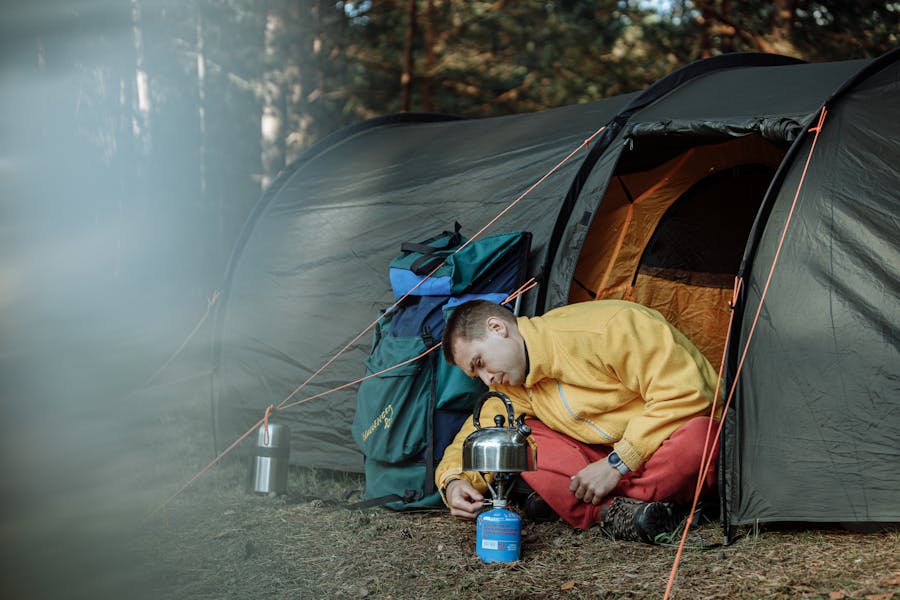
Butane vs Isobutane vs Propane – Camping Stove Fuel Guide
As mentioned before, when choosing a fuel you have to pay attention to several factors. So, what are they? How are they important? Read below to know more.
These are the factors that you should consider before choosing a fuel. These are important because the fuel you choose will be your fuel partner throughout your camping journey.
Availability
You have to choose a fuel type that is usually available everywhere. Some fuels are seldom available. So, make sure to have extra fuel wherever you go. If not, you will face more trouble when your fuel runs out.
Butane is not very hard to find, it is available in many gas stations. But, Butane for your camping stove is difficult to find because of the huge amount of cartridges available. These cartridges are available in various varieties. However, when choosing a Butane cartridge check whether it is standardized or not. You can purchase Butane cartridges at Walmart or Target. This will be easy if you camp near a town. But it will become hard if you are far from civilization.
Isobutane is one of the most common fuel types that is used by backpackers and campers. It is always available in any sporting goods store. You can also find Isobutane at some gas stations. But sometimes, some camping stoves will not work properly if you use Isobutane instead of a particular fuel.
Propane is most commonly found almost in all gas stations. So, you do not need to find any sporting goods stores. It is available in 1 lb cylinders and 15 lb cylinders. These large cylinders are ideal for long camping trips.
Both Butane and Isobutane are much hard to find as most camping stoves have their own boundaries. Meanwhile, Propane is somewhat easy to find than Butane and Isobutane.
Stove Compatibility
Though you have found the perfect fuel for your camping stove, it will become a waste if your stove is not compatible with the fuel. There are hundreds of camping stoves available in the market. But, many camping stoves are designed to run on Propane. As it is easy to find you will be fine with it.
However, most lightweight camping stoves are compatible with Isobutane canisters. On the other hand, Butane has lost its favor in the camping stove industry. The reason is that Butane is not compatible with Propane and Isobutane.
Burn Efficiency
The burning efficiency of your fuel depends on what type of camping stove you are using. Also, for this, the environmental condition effects.
The burning efficiency of the fuel you choose is one of the most significant things that you must consider. Here we discuss only Butane, Isobutane, and Propane. However, the burn efficiency of these fuels depends on the stove that you use and the environmental condition around you.
But, the thing that you intend to burn also matters here. It will take several minutes to cook something. But, it will take one minute to boil some water. So, it depends on what you choose.
However, all these three fuels are efficient if your goal is to cook quickly.
Cost
It is useless to spend more money on camping gear and camping stove fuel. So, it is better to purchase low-cost fuel that is suitable enough to use at a camping site. Also, there are many camping stoves available in the market for both low and higher costs. Some of them require more fuel. Purchase a perfect camping stove fuel for better use.
Butane and Isobutane canisters can be more effective if you buy the long cylindrical cans in bulk. These backpacking canisters are very expensive and not sold in large quantities.
Propane is extremely cost-effective as you can purchase it in very large containers. It is cheaper than any other pressurized fuel. As it is available in all hardware, you can refill your 20 lb large container for less money and use it for the long term.
So, through this, we can evaluate that Propane is cheaper than Butane and Isobutane.
Weight
The weight of the fuel depends on what stove you have purchased and how much fuel you have to carry. Some fuels are heaviest as they are liquids. Some fuels can be purchased in small containers and can easily be placed in your backpack. So, if you plan for a long camping trip, it is better to have extra-weight fuel instead of carrying individual fuel containers. Isobutane and Butane fuel canisters are much smaller than the typical Propane containers.
Storage
The storing system of your fuel depends on what type of camping stove you are choosing. Because some camping stoves require gas fuels while some require liquid fuels.
Propane, Butane, and Isobutane belong to the gas fuel category. Gas fuels are easy and safer to store and maintain their potency. It is the valves and the seals that decide the expiration date of the gas fuels. These could last longer than 20 years or less than 20 years depending on the quality of the container.
If you choose any old canister for camping, make sure to check it before leaving. Also, avoid storing these fuels near any ignition sources though they are sealed.
Cold Weather Tolerance
During cold weather conditions, if your camping stove stops working because the fuel can not tolerate cold temperature your camping becomes more terrible.
Among Butane, Isobutane, and Propane; the most cold-tolerant fuel is Propane. Propane is an ideal fuel as it can tolerate cold weather. As the Propane containers are heavyweight, it has got less preference among backpackers. So, many manufacturers sell their Isobutane/Butane mixed with Propane. This creates some cold weather tolerance for the fuel.
Though Isobutane is more ideal than Propane, it is seldomly available.

The three fuels; Butane, Isobutane, and Propane have their own features. They are different from each other and it is hard to decide which fuel is mostly perfect for your camping stove. But, it all depends on which camping stove you purchase. It is because some camping stoves will not support some fuels apart from the required fuel. However, there are pros and cons to each of them. You can go through it and decide for yourself.
Read More: